"winter clothes for girls" - Google News
[unable to retrieve full-text content] School Uniform Sweater Vest for Boys Girls V Neck White Trim Color Block Sleeveless Knitted Pollover Top Fall Winter Clothes The San Joaquin Valley Sun
Tongue in Chic: Jeans aren't that great. Here's why. - Daily Trojan Online |
| Tongue in Chic: Jeans aren't that great. Here's why. - Daily Trojan Online Posted: 30 Oct 2019 09:25 PM PDT  In 1853, people from all over the world headed west to the California Gold Rush with hope in their hearts and dollar signs in their eyes. But those who really struck it rich were the ones who provided food, lodging and equipment to the miners. Two of those people were Jacob Davis and Levi Strauss, who cut and stuck rivets in cotton cloth to make a sufficiently sturdy pair of pants and unknowingly devised one of the most iconic pieces of clothing of all time. Jeans are as American as baseball, hot dogs and apple pie. You'd be hard-pressed to find someone who doesn't own a pair of jeans. If you walk down the street, the majority of passersby will be wearing jeans. Jeans are wardrobe workhorses. You can dress 'e'm up or down; you can wear 'em at the office, to the grocery store or on a first date. But, in reality, jeans are ugly, unflattering and unattractive.  OK, hear me out. I'm not broadly condemning all jeans; my gripe is mostly with the super skinny jeans whose popularity skyrocketed in the early 2000s. Plus, in the interest of full disclosure, I do actually own two pairs myself: one from AGOLDE, with a boyfriend fit and criss-cross fly and one from APC that I altered to add tulle to the hems. I made an exception for these two because they are high-quality, well-made and long-lasting, but most importantly, they are statement pieces. When I wear them, they are the focal point of my outfit. However, I believe the vast majority of people consider jeans to be a sort of blank canvas — a safe, bland, boring option that's nonexciting but non-offensive. They wear jeans because it's the universal basic staple. And that's a mistake, for two reasons: They don't look good on anyone and they don't look good with anything. They don't look good on anyone Jeans are the most stressful clothing to shop for, second only to swimsuits. We try on 50 pairs in the dressing room, twisting this way and that, wondering if our butt looks too big — or in the age of the Kardashians, if our butt looks too small. Why is it so hard to find a decent pair of jeans? First of all, jeans are not forgiving. Denim is a stiff, uncompromising fabric — just ask any Japanese raw selvedge enthusiast. But even for jeans with added stretch, it's hard to wriggle your way into them. There's a fine line between "sexy, so tight they look painted on" and "my legs are sheathed in sausage casings." Jeans are often too constricting around the rear, smushing your ass down and making it seem flatter and wider than it is. High rise jeans have emerged as a solution, but all rises have their drawbacks. High rise: You're taut, you're cinched, you're snatched … but you can't breathe. Mid rise: Hits right below the belly button, creating the perfect muffin top situation. Low rise: I promise you, no one wants to see your thong. Jeans can also shorten your legs. When you wear black pants with black shoes, the line of your leg is unbroken, creating an elongated silhouette. But I don't know anyone who owns denim shoes, so wearing jeans with, for example, white sneakers, abruptly cuts off your leg. Plus, most jeans are already too long for the average person, so the excess fabric puddles around the ankle — not cute. Thus, jeans only look good on certain body types: 6-foot models with mile-long legs, or the apple-bottomed shawty in the club hypnotizing T-Pain. For those who are more short-legged and flat-assed — such as myself — jeans are a one-way ticket to schlubville. They don't go with anything Blue is finicky. It doesn't play well with a lot of other colors. Its opposite on the color wheel is orange, which definitely doesn't do anyone any favors. Black does not, in fact, go with anything; because blue is so subdued, wearing blue and black together will wash you out. Blue and white is the most attractive combination — think of the classic white T-shirt paired with blue jeans. But once you add other colors into the mix, things can get a little dicey. But Kitty, you say. What about white/black/colorful jeans? All well and good, until you spill red wine on them or run them through a rinse cycle. All of a sudden, your inky black jeans have turned a sickly shade of grey. I can tell you from personal experience: The dyes used to color denim fade and bleed unbelievably easily. Also, let's talk shoes. No shoes look good when you're wearing jeans. Sandals are a summer shoe and should be paired exclusively with shorts, skirts or dresses, but never pants. Sorry, nothing will sway my mind on this. Flats are a personal pet peeve of mine, as they provide zero arch support and make your legs seem stubby: If your shoes don't have a heel to contribute some extension, your inseam is gonna appear three inches shorter than it actually is. As for boots, have you ever tried to stuff five inches of denim into tightly-laced Doc Martens? Everyone knows that's a recipe for severe bunching. (Bootcut jeans are an exception, of course, but who wants all that loose fabric flapping around their ankles?) And if you decide to wear them with sneakers like adidas or Converse, you might as well throw on an Aéropostale hoodie for good measure because voilà, you've instantly transported yourself back to middle school. Finally, I would be remiss not to mention the environmental impact of jeans. They are one of the most resource-intensive clothing items to produce, requiring almost 2,000 gallons of water to make one pair. Factory runoff containing chemicals used in indigo dye pollute and contaminate rivers. Why unduly burden the planet for something that's ill-fitting and uncomfortable? Save your time, money and the earth by investing in some solid slim-fitted trousers, which I absolutely swear by — but that's another column. Kitty Guo is a senior writing about fashion. Her column "Tongue in Chic" runs every other Wednesday.  |
| How Jeans Got Weird - The Atlantic Posted: 23 Oct 2019 12:00 AM PDT 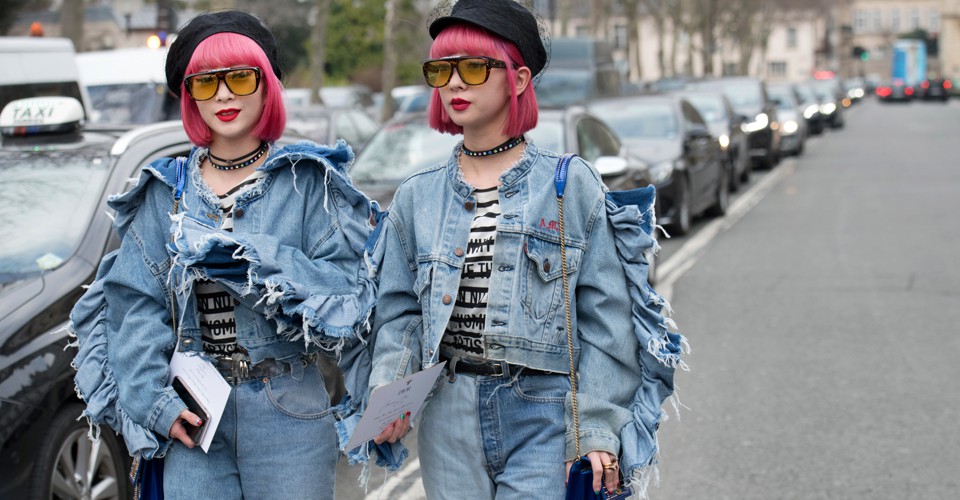 It's hard to imagine how a person could be better at wearing jeans than Rihanna. While the pop star is practically worshipped in fashion circles for her wardrobe's endless variety, the one thing she clothes herself in nearly constantly is denim. Her repertoire includes every permutation of jeans imaginable, but also extends to denim jackets, denim dresses, denim shorts, denim skirts, denim thigh-high boots, and, on at least one occasion, a carpet-dusting denim train. Rihanna is one of the most photographed people alive, so her appreciation for denim has made her a walking billboard for the fabric—especially its abundance. Daily paparazzi photos of her entering airports or leaving hotels have proved that virtually every type of clothing, at every price, can now be made of denim. Jeans themselves have never been more varied: cropped, skinny, wide, straight, kick-flared, light, dark, distressed, embellished. For denim purveyors, Rihanna's favor years couldn't be more opportune. Before 2018, the American jeans market had been in decline for half a decade. Consumers turned to stretchy pants and leggings, spurring many nervous whispers in the fashion industry about denim's demise. Now, thanks to a confluence of factors, it's clear that the death of denim was largely exaggerated. Not only is America getting a little bored of its black leggings, but jeans are back and, in many ways, bigger—and wider, skinnier, shorter, and more varied—than ever. If you want to sell clothes in America, it helps a lot if buyers think your product is cool. Jeans have a backstory that any marketer would kill for. "Denim first became popular in the 1920s and 1930s in tandem with the rise of Hollywood," explains Emma McClendon, an associate curator at the Museum at the Fashion Institute of Technology, who orchestrated a denim retrospective at the museum in 2015. "That positioned jeans as the uniform of the lone cowboy, synonymous with the romance and promise of the American West." Over the years, the cuts and washes changed, but denim's position as a relatively democratic element of the wardrobes of stylish, influential people didn't. Bell-bottoms ruled the late '60s and '70s. Acid wash and tapered legs took over in the 1980s. Looser, higher-rise mom and dad jeans were part of millions of outfits in the '90s, a decade capped by several years of angsty skater teens embracing enormous JNCOs. In the 2000s, celebrities took "low rise" and "skinny" to their logical extremes. Then, for a moment, denim fell off. The jeans popular during the 2000s were uncomfortable and difficult to wear for the hundreds of millions of Americans without pop-star bodies. Cool jeans also suddenly became quite expensive. New designer brands such as Seven for All Mankind and Citizens of Humanity boosted prices well over $150, which made it harder than ever for people to feel like they could be on equal fashion footing with the celebrities whose looks they wanted to emulate. By the end of the decade, people were ready for something different, and "athleisure"—leggings, joggers, and yoga pants—swooped in. Leggings were far more comfortable than the super-tight jeans of the previous decade. They arrived as much of America was casualizing quickly enough to accommodate stretchy pants in social life and some workplaces. People began searching for yoga pants in earnest in late 2011, and American denim sales began to decline within a year or so. Read: The mystery of business casual But the singular reign of leggings was short-lived. After a few years, people seemed to realize that maybe thin elastic pants aren't perfect for all occasions. Usually clothing trends as big as athleisure maintain their dominance for at least a decade, but black leggings only allow for so many looks. Jeans were poised to strike back. "The increased popularity of denim is a reaction to the dominance of the leggings and yoga pants of athleisure," McClendon says. Last year, for the first time in half a decade, sales of denim increased. Leggings are a perfectly reasonable way to clothe the lower half of your body, but in situations where you want to wear an outfit instead of just put on some clothes, they don't provide much personality. That's where jeans excel. Jonathan Cheung, Levi's senior vice president of design innovation, credits Rihanna, along with other mega-famous creatives including Beyoncé, Kanye West, and the Off-White founder and Louis Vuitton designer Virgil Abloh, with helping turn the attention of fashion's early adopters back toward denim. They did it by mixing often-inexpensive vintage jeans with luxury goods. "It gives authenticity to an outfit," Cheung says. "You look less pretentious when you offset your wardrobe with something so democratic." That's a power leggings don't have. A pair of Christian Louboutin stilettos won't work with Lululemons, but heels look just as great with the right jeans as a pair of fresh Nike Air Maxes do. In the past, only one or two styles of jeans were "cool" at a given time. "Pre-internet, when you just had a store, you probably just had a little section in the store that was your denim table. Your denim table could only hold so many things," Cheung says. "And you had traditional media, so you only had so many pages in a magazine that would talk about denim." Designers had to go all-in on just a couple of cuts or washes and try to please as many people as possible. Now denim inventory is as infinite as the internet itself. Fast-fashion retailers update their selections constantly, which means that nearly every type of denim is available simultaneously. Depending on whom you ask, the big thing right now might be mom jeans. It might be wide-legged cropped jeans. It might be skinny cropped flares. It might not be jeans at all, but denim jackets or overalls. Even skinny jeans have gotten easier to wear, as textile technology has found ways to make stretchier denim look more like the real thing. Cheung says that Levi's only expects the market to become more splintered, right down to individual preference. Earlier this year, the brand launched a program called Future Finish, which lets online shoppers customize the detailing on their jeans with lasers. Read: The sneaky way clothing brands hooked men on stretch jeans For a lot of people, the desire for a unique look means going vintage. Straight-cut Levi's 501s and trucker jackets have been around so long that they're abundant in secondhand stores, and the aesthetic has found particular favor with young shoppers who obsess over online-only clothing-swap markets such as Depop. It's those shoppers, now in their teens and early 20s, that brands will need to impress in order to keep themselves relevant going forward. Luckily for them, "vintage tights" just doesn't have a great ring to it. Jeans brands have a clear stake in selling the narrative of their own immortality, but that doesn't mean they're wrong. Jeans' cool past will seemingly protect denim from new trends, at least for the foreseeable future. As Cheung notes, humans are obsessed with stories. "We're creatures who love meaning," he says. When it comes to jeans, the stories we tell ourselves are just too good to pass up—even for the pleasures of stretchy pants. We want to hear what you think about this article. Submit a letter to the editor or write to letters@theatlantic.com.  Amanda Mull is a staff writer at The Atlantic.  |
| You are subscribed to email updates from "jeans" - Google News. To stop receiving these emails, you may unsubscribe now. | Email delivery powered by Google |
| Google, 1600 Amphitheatre Parkway, Mountain View, CA 94043, United States | |


Comments
Post a Comment